Current Central Time (CT)
Central Time is the second most populous US time zone and covers the Gulf Coast, the Mississippi Valley and most of the Great Plains. It runs from Texas and Louisiana in the south to Minnesota and North Dakota on the Canadian border, and includes Chicago, the third-largest US city. The zone is home to about 29% of the US population - roughly 95 million people.
Time in the other US time zones right now
Central Time Zone Map
The map highlights every state on Central Time. States shown in the darker shade are entirely within the zone; lighter states are split between Central Time and a neighboring zone. Hover over a state for details, or see the complete US time zones map for all six zones side by side.
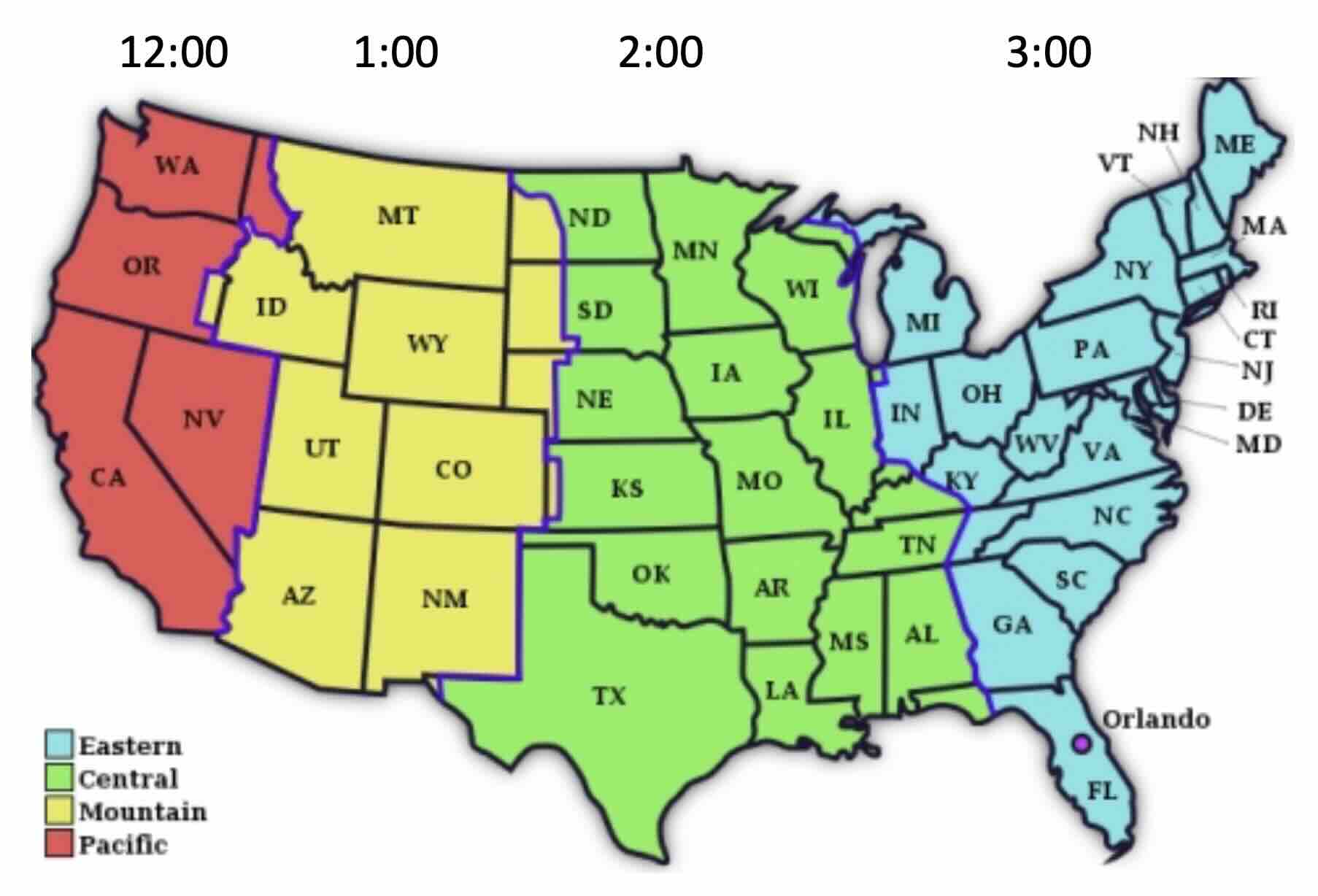
States in the Central Time Zone
Entirely on Central Time (10)
Partly on Central Time (10)
- Florida - the western Panhandle, including Pensacola and Panama City
- Indiana - 12 counties in the north-west (near Chicago) and south-west (near Evansville)
- Kansas - all but four western counties on the Colorado border
- Kentucky - the western half, including Bowling Green and Paducah
- Michigan - four Upper Peninsula counties bordering Wisconsin
- Nebraska - the eastern two-thirds, including Omaha and Lincoln
- North Dakota - the eastern and central parts, including Fargo and Bismarck
- South Dakota - the eastern half, including Sioux Falls and Pierre
- Tennessee - Middle and West Tennessee, including Nashville and Memphis
- Texas - all except El Paso and Hudspeth counties in the far west
Major cities on Central Time
Chicago, Houston, Dallas, San Antonio, Austin, Minneapolis, New Orleans, Kansas City, Milwaukee, Oklahoma City, Memphis, Nashville, St. Louis, Omaha.
Central Time is one hour behind Eastern and two hours ahead of Pacific, which makes it the most convenient zone for nationwide business calls: a 10 AM Central meeting is 11 AM in New York and 8 AM in Los Angeles. Its western edge is ragged - the boundary with Mountain Time zig-zags through Kansas, Nebraska, the Dakotas and Texas.
Central Time Converted to Other US Time Zones
Use this table to convert Central Time to the other contiguous US time zones and UTC. The differences between the four main zones stay the same all year because they all switch to Daylight Saving Time together (Arizona is the only exception, see the Mountain Time page).
| Central (CT) | Eastern (ET) | Mountain (MT) | Pacific (PT) | UTC |
|---|---|---|---|---|
| 12:00 AM CT | 1:00 AM ET | 11:00 PM MT | 10:00 PM PT | 6:00 AM (winter) / 5:00 AM (summer) |
| 3:00 AM CT | 4:00 AM ET | 2:00 AM MT | 1:00 AM PT | 9:00 AM (winter) / 8:00 AM (summer) |
| 6:00 AM CT | 7:00 AM ET | 5:00 AM MT | 4:00 AM PT | 12:00 PM (winter) / 11:00 AM (summer) |
| 8:00 AM CT | 9:00 AM ET | 7:00 AM MT | 6:00 AM PT | 2:00 PM (winter) / 1:00 PM (summer) |
| 9:00 AM CT | 10:00 AM ET | 8:00 AM MT | 7:00 AM PT | 3:00 PM (winter) / 2:00 PM (summer) |
| 10:00 AM CT | 11:00 AM ET | 9:00 AM MT | 8:00 AM PT | 4:00 PM (winter) / 3:00 PM (summer) |
| 12:00 PM CT | 1:00 PM ET | 11:00 AM MT | 10:00 AM PT | 6:00 PM (winter) / 5:00 PM (summer) |
| 2:00 PM CT | 3:00 PM ET | 1:00 PM MT | 12:00 PM PT | 8:00 PM (winter) / 7:00 PM (summer) |
| 3:00 PM CT | 4:00 PM ET | 2:00 PM MT | 1:00 PM PT | 9:00 PM (winter) / 8:00 PM (summer) |
| 5:00 PM CT | 6:00 PM ET | 4:00 PM MT | 3:00 PM PT | 11:00 PM (winter) / 10:00 PM (summer) |
| 6:00 PM CT | 7:00 PM ET | 5:00 PM MT | 4:00 PM PT | 12:00 AM (winter) / 11:00 PM (summer) |
| 8:00 PM CT | 9:00 PM ET | 7:00 PM MT | 6:00 PM PT | 2:00 AM (winter) / 1:00 AM (summer) |
| 9:00 PM CT | 10:00 PM ET | 8:00 PM MT | 7:00 PM PT | 3:00 AM (winter) / 2:00 AM (summer) |
| 11:00 PM CT | 12:00 AM ET | 10:00 PM MT | 9:00 PM PT | 5:00 AM (winter) / 4:00 AM (summer) |
Daylight Saving Time in the Central Time Zone
The whole zone observes Daylight Saving Time. Clocks move forward one hour at 2:00 AM on the second Sunday in March (CST becomes CDT) and back one hour at 2:00 AM on the first Sunday in November. In 2026 the dates are March 8 and November 1; in 2027 they are March 14 and November 7.
- CST - Central Standard Time: UTC-6, in effect November to March
- CDT - Central Daylight Time: UTC-5, in effect March to November
Frequently Asked Questions
What time is it in the Central Time Zone right now?
The live clock at the top of this page shows the current Central Time, updated every second from your device's clock. It automatically switches between CST (UTC-6) in winter and CDT (UTC-5) during Daylight Saving Time.
Which states are in the Central Time Zone?
10 states use Central Time entirely: Alabama, Arkansas, Illinois, Iowa, Louisiana, Minnesota, Mississippi, Missouri, Oklahoma, Wisconsin. Another 10 are split, with only part of the state on Central Time: Florida, Indiana, Kansas, Kentucky, Michigan, Nebraska, North Dakota, South Dakota, Tennessee, Texas.
What is the UTC offset for Central Time?
Central Standard Time (CST) is UTC-6. During Daylight Saving Time, from the second Sunday in March to the first Sunday in November, the zone uses CDT, which is UTC-5.
Does the Central Time Zone observe Daylight Saving Time?
Yes. Every state in the Central Time Zone moves its clocks forward one hour on the second Sunday in March and back one hour on the first Sunday in November.
Is Central Time the same as CST?
Almost. CST (Central Standard Time) is the winter clock, and CDT (Central Daylight Time) is the summer clock. "Central Time" or "CT" refers to whichever of the two is currently in effect, so it is the safest term to use when scheduling.